
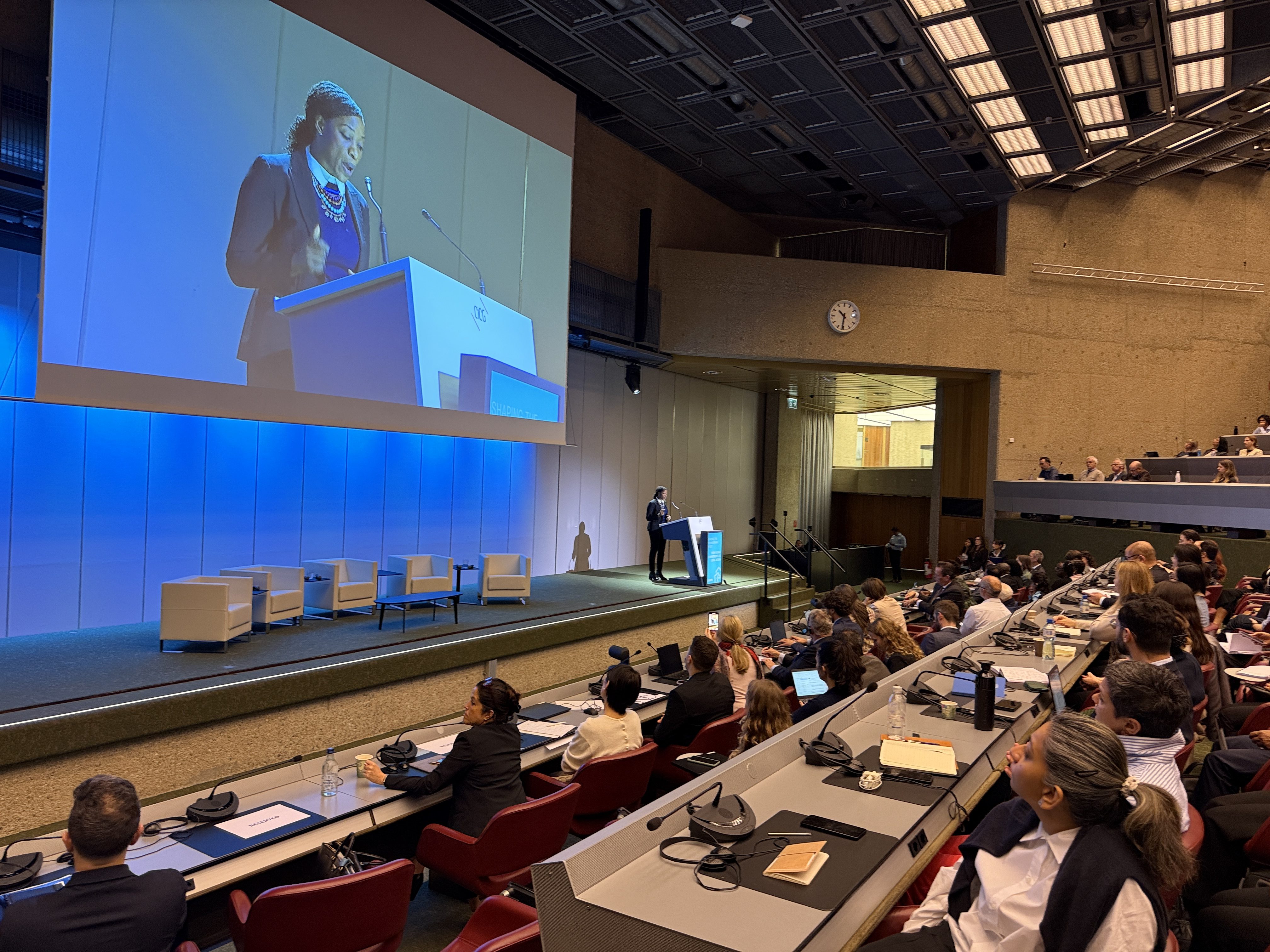
At the Humanitarian Networks and Partnerships Weeks (HNPW) in Geneva, ESUPS engaged with colleagues working in the humanitarian system to advance one key objective: making collaboration in supply chains more practical and actionable when it comes to stock prepositioning. In this article, we take the time to reflect on what we brought back from this event.
From March 10 to 12, we hosted an exhibition stand with a live demonstration of the STOCKHOLM platform. Colleagues tested its functionalities in real time, exploring how improved visibility of prepositioned stocks can optimise emergency preparedness and anticipation.
During the event, our team engaged in discussions with key partners to identify common goals and work towards concrete collaboration.
Ludovico Gammarelli from ECHO, the European Civil Protection and Humanitarian Aid Operations department of the commission of the European Union, highlighted that “in supply chain, there is a huge potential gain to be made… we need to mutualize more what agencies are doing and make them talk better”.
STOCKHOLM relies on data shared by actors across the humanitarian system, including governments, INGOs, NGOs, Red Cross, and the UN. With sufficient stock data, the platform can generate recommendations to optimise cost and response times in anticipation of disasters. Very often, the challenge lies in simply accessing the data.

Beyond the exhibition stand, ESUPS team members attended sessions to engage in broader discussions on technology and humanitarian logistics. In a session hosted by Log:IE, the Humanitarian OpenStreetMap Team (HOT) and the Heidelberg Institute for Geoinformation Technology (HeiGIT), a recurring message was the importance of shared data as a foundation for coordination.
Rebecca Firth, Executive Director of HOT, emphasized the need for interoperable systems, a theme at the core of STOCKHOLM’s ongoing development
“Data sharing is critical to improve the efficiency of the sector overall. What’s really important to us is free and open data that can be used as a baseline, across everybody.”
The Global Information Management (IM) Working Group also hosted a session on the Humanitarian Reset, focusing on how IM can strengthen sector-wide coordination. Stuart Campo, Senior Advisor at IOM and member of the working group, mentioned the intention to define a common set of tools for the humanitarian actors as a starting point for common work.
ESUPS team goal at HNPW was to advocate for collective stock prepositioning through the STOCKHOLM platform and to join the discussion on a more efficient humanitarian supply chain. We realize the importance of preserving this type of forum in these troubled times for actors to meet and take things forward with a collective responsibility.
We leave HNPW with the challenge of turning these rich discussions into concrete collaboration and a clear direction in advancing STOCKHOLM’s data sharing and interoperability with other digital supply chain systems.