


The full potential of collective humanitarian stock prepositioning practices has not yet been seen at scale. The central challenge is not a lack of confidence in the benefits of prepositioning, but rather the fact that prepositioning can be a complex, costly, demanding and solitary exercise.
The ESUPS project was created to change this and offer pathways for organisations to engage actively in driving change. By combining reliable evidence, committed partnerships and national leadership, we are making stock prepositioning more coherent, collaborative and efficient, thereby strengthening emergency preparedness, anticipation and response as a whole.
This year, while supporting the humanitarian responses in Nepal, Colombia and Venezuela, our team observed three different levels of readiness with regard to collective stock prepositioning.
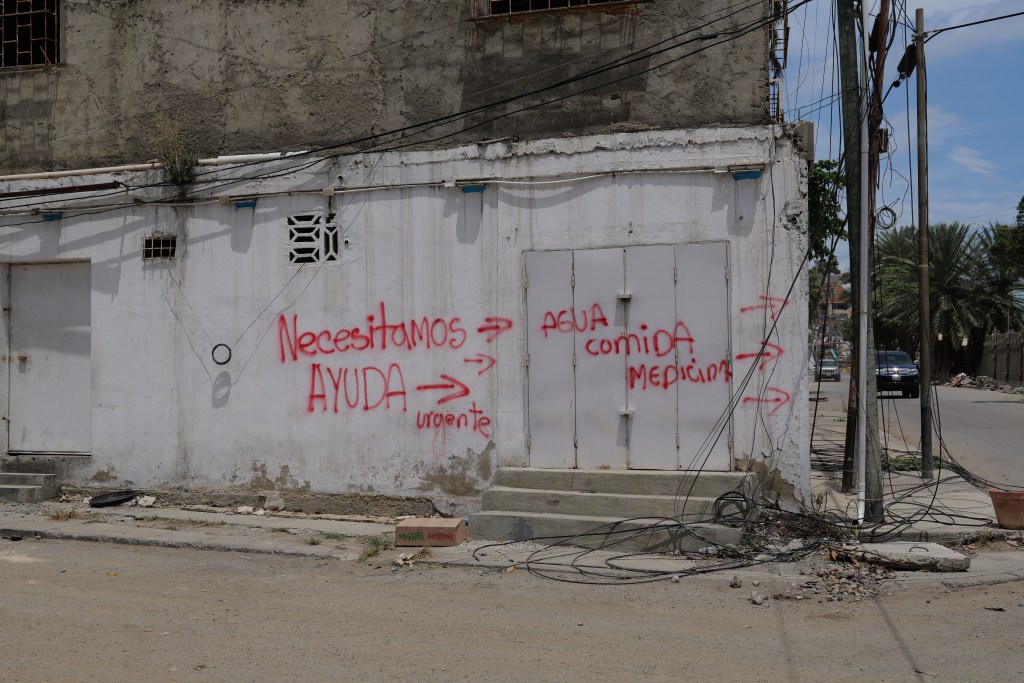
The first example came from Venezuela, where two powerful earthquakes struck in June 2026, mobilising national and international responders. Through our engagement in the Logistics Working Group led by WFP, and using the data available on the STOCKHOLM platform, the ESUPS team produced a report within 48 hours containing relevant information on the humanitarian stocks available in the country, including their locations and quantities. This information was disseminated through the Logistics Working Group, reproduced in reports by Atlas Logistique and published on LinkedIn.
A few months later, Colombia was struck by an earthquake at a time when humanitarian organisations were starting to explore a collective approach to stock prepositioning. At the time, the STOCKHOLM platform contained more than 4,000 stock records for the country. However, this information could not be reliably disseminated or used for operational decision-making. The data had been entered in bulk by a single in-country focal point on behalf of the wider humanitarian community, through the National Logistics Working Group more than two years ago.
While this initial effort demonstrated the potential of collective stock mapping, it never evolved into a model in which individual organisations took ownership of maintaining and updating their own data. As a result, despite the significant effort invested in building the dataset, the information available on STOCKHOLM did not provide a sufficiently accurate and up-to-date picture of the stock situation in Colombia when it was most needed.
In Nepal, following the 2015 earthquake, organisations and government authorities in the country actively engaged with the STOCKHOLM platform. More than ten organisations and government actors contributed stock information, enabling ESUPS to produce a country-wide analysis in 2020 covering four clusters and 20 core relief items. At that stage, interest in collective stock prepositioning was evident, and partners were actively sharing information.
However, due to changes in government and staff turnover within organisations, combined with a broader and persistent tendency in the humanitarian sector to react rather than anticipate, this interest gradually faded. As a result, the commitment to updating and sharing humanitarian stock data in the country was not sustained. By the time the flash floods occurred in August 2026, the information was not reliable to conduct a meaningful analysis.
These three cases illustrate different levels of readiness. Venezuela showed how shared stock data can generate timely and operationally relevant information during an emergency. Colombia and Nepal demonstrated the importance of updating stock data regularly as part of preparedness efforts, because without consistent updates, the information cannot be relied upon when an emergency occurs.
We understand that there is considerable awareness of the importance of collective prepositioning and a genuine interest in collaboration among organisations and individuals. Its full potential is within reach, and it is already possible to see the positive impact when these practices are put into action.
Although conflicting priorities related to retaining control and enhancing agency focused visibility for funding reasons remain, the ESUPS team, with support from the European Union, Twilio and Welthungerhilfe, continues to be firmly committed to turning awareness into commitment and making the STOCKHOLM platform the global reference for all matters related to humanitarian stock prepositioning.
Interested in stock prepositioning?
Subscribe to the ESUPS newsletter and stay updated on all things related to stock prepositioning.